Speaker Biographies
More info to follow. The talk descriptions are currently listed on the Adult Program page.
2011 Speakers
Woody Sullivan |
Professor Sullivan's interests are in astrobiology, the search for extraterrestrial intelligence (SETI), and the history of astronomy. As Chair of the Steering Group of the UW's Astrobiology Program, he is one of the leaders of the UW's interdisciplinary graduate program and related efforts in Astrobiology. For example, together with Professor John Baross (Oceanography) he edited a graduate-level textbook Planets and Life: The Emerging Science of Astrobiology, published by Cambridge University Press in 2007. SETI activity has included a collaboration with the Serendip group, using the Arecibo 1000-foot dish for an all-sky search for a wide variety of signal modulation at 21 cm. This seti@home project has involved more than 4 million participants on the Web since its launch in 1999. History of astronomy research emphasizes the twentieth century, in particular the development of early radio astronomy and of ideas on extraterrestrial life. In 2009 he published Cosmic Noise: A History of Early Radio Astronomy (Cambridge University Press), which examines in detail the first decade of worldwide radio and radar astronomy. A biography of William Herschel is a long-term project just starting. As an adjunct professor in the History Department, he also teaches history of science. Other interests include the battle against radio interference and light pollution; he is active in the Intern ational Dark-Sky Association and its local chapter Dark Skies Northwest. He co-edited the volume Preserving the Astronomical Environment (2001), and is working on an improved version of his "Earth at Night" image and poster. He also studies the relationships between astronomy and other aspects of culture, such as art, literature, religion, history, and astrology. Sundials are a special and peculiar passion. He has designed many sundials, one of which (a MarsDial, the first extraterrestrial sundial) landed on Mars in 2004 as part of the Mars Exploration Rover mission. He has been involved in the design of many public sundials, and aims to make the Seattle region the sundial capital of North America. |
| Michelle B. Larson, Ph.D. Utah State University |
Michelle Larson is vice provost at Utah State University. In this role she interacts with students and faculty from all disciplines, and she thrives on learning about and helping to facilitate academic pursuits campus-wide. Prior to joining USU, Michelle was the Deputy Director of the Center for Gravitational Wave Physics, at Pennsylvania State University where she was responsible for integrating the research, education and outreach efforts of the Center and worked closely with research scientists to share exciting discoveries in the field of gravity with a broad range of audiences. In the years prior to Penn State, Michelle was the deputy director of NASA's Montana Space Grant Consortium, she was a scientist in the Kellogg Radiation Laboratory at Caltech where she was the project coordinator for the California High School Cosmic Ray Observatory (CHICOS), and she worked as a public outreach scientist in the Space Sciences Laboratory at the University of California, Berkeley where she developed ways to bring the science of NASA missions to public and school audiences. Michelle grew up in Anchorage, Alaska and after high school moved to Bozeman, Montana where she received her B.S. in Physics from Montana State University. She continued at MSU and received a M.S. and Ph.D. in Physics, with a research area in neutron star astrophysics. Michelle enjoys cooking, geocaching, and is also an amateur astronomer. She particularly enjoys sharing the more spectacular objects of the night sky with the general public. A favorite highlight was when a young child exclaimed, "Wow! Saturn looks just like a Chevy symbol." |
| Shane Larson Assistant Professor of Physics Utah State University |
Shane Larson is an assistant professor of physics at Utah State University with a specialty in astrophysics and gravitational dynamics. Shane grew up in eastern Oregon, and was an undergraduate at Oregon State University where he received his B.S. in Physics in 1991. He received an M.S. in Physics (1994) and a Ph.D. in theoretical physics (1999) from Montana State University. Before coming to Utah State, he was a postdoctoral scholar at NASA's Jet Propulsion Laboratory, then at the California Institute of Technology, and finally at the Center for Gravitational Wave Physics at the Pennsylvania State University. He was formerly an assistant professor of physics at Weber State University. Shane is also an avid amateur astronomer, observing with two homebuilt telescopes, a 12.5" and a 22" Dobsonian. He lives under dark skies in Paradise, Utah with his wife, daughter and three cats. In addition to astronomy, he enjoys hiking, mountain biking, and geocaching. He also collects Legos, fountain pens, and telescopes. |
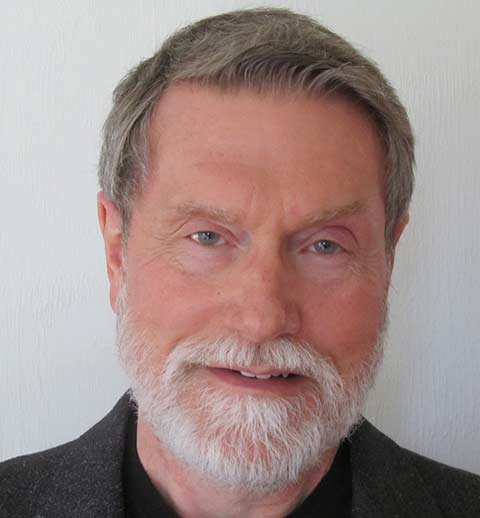
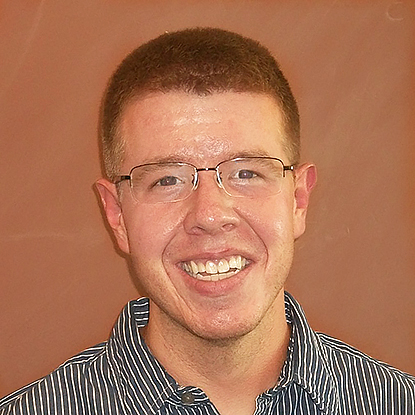
| Alan Bedard | I'm a Technical Documentation Writer with an eclectic background that includes navy nuclear power, consumer/biotech/aerospace electronics and several decades as a writer. Intermixed with my work has been an ongoing love of astronomy. I took my first astro photo back in 1990 with a Nikon film camera mounted on a GEM with a small battery powered clock drive. It was a picture of Ursa Major. Now I have a small private observatory here in Kittitas county, with very modest equipment but a great site. I'm currently interested in photometry and spectroscopy of cataclysmic variables. But more importantly, I'm interested in Citizen Science; the contribution of amateurs to ongoing scientific research. You can see some of my work by going to my observatory's web site at www.observatory.digital-sf.com |
2010 Speakers
| Tom Gwilym | Tom has been interested in the sky since he was a drooling 1 year old watching the Apollo 11 landing (Tom is proud to say that he did watch the landing, but remembers nothing of it!) . Mom said that one of his first complete sentences spoken was "See the moon!" as his little finger pointed at the sky. A wobbly Tasco refractor was his first telescope which was outgrown by high school, money was short and he could never get one of those fancy dream telescopes that had a "clock-drive" and camera mount that he always saw advertised in the magazines. Many years later, the little ETX 90 was purchased and soon aperture fever hit. The Meade LX90 arrived, followed by the Orion 80ED, and a few others. Tom was assigned the job of president of the Eastside Astronomical Society, and is caretaker of the club's donated Meade 12" LX200 which was taken to a few star parties, but was just too heavy to be called "portable". With assistance of his girlfriend, her digging and construction skills, a permanent home for the scope was constructed in the backyard of his light polluted Renton home - The Highlands Astro-Shack Observatory. (http://tegwilym.zenfolio.com) When not observing the skies (usually because of clouds or full moon), Tom works his day job as a System Administrator for a non-profit company in Seattle, works part time as a flight instructor, collects astronaut autographs, sailing, bicycling, making sawdust with a table saw, and many other hobbies. |
| David Ingram | During his teenager years in Florida, Dave's interest in science, space and astronomy was fueled by the NASA Mercury, Gemini and Apollo programs. Since then, with 30 year at the Boeing Company, Dave's business, engineering backgrounds have helped him form a lifelong network among those credited with many of the aerospace industries and NASA's greatest achievements. Now a resident of Kent, WA, Dave serves as an officer for the Boeing Employees' Astronomical Society. He also has active memberships with the Seattle Astronomical and Eastside Astronomical Societies and has recently become active in the IDA Dark Skies Northwest chapter. Dave regularly travels to the US Southwest for star parties, Messier Marathons and observing on Kitt Peak National Observatory. He has established contacts with clubs and individuals including a number of comet hunters, astroimagers and manufacturers. In addition to amateur astronomy and telescope making, Dave's hobbies include photography, baseball, travel, flying, fishing, and amusing two active young grandchildren. |
| John Wisniewski | Dr John Wisniewski is a National Science Foundation Astronomy & Astrophysics Postdoctoral Fellow at the University of Washington. He received his PhD in physics from the University of Toledo and previously served as a NPP Fellow at NASA's Goddard Space Flight Center. Dr Wisniewski is an observational astronomer who studies circumstellar disk systems of all ages, ranging from young planet-forming disks to gaseous disks blown off of older stars. He uses a wise variety of ground- (KPNO, CTIO, Gemini, UKIRT, Subaru, VLT, Keck) and space-based (FUSE, Chandra, Spitzer, Kepler, Hubble Space Telescope) telescopes to pursue this research. |
| Linda Khandro | Linda Khandro is something of a self-described "mixed salad!" She is a geologist with a Masters Degree in Teaching Earth Science and Washington State Teaching Certificate, and has been teaching college earth and space sciences (geology, astronomy, oceanography, meteorology, environmental science) since 1991. Interest in Project AstroBio (www.astro.washington.edu/projastrobio/) as an astronomer volunteer, and interest in Astrobiology (http://depts.washington.edu/astrobio/) brought her to the University of Washington, Seattle as an Education/Public Outreach specialist from 2000-2006. In 2007 she moved back home to BC, Canada, and along with her work as a musician (harps & percussion), can be found at www.lindakhandro.com. |
2009 Speakers
| Terence Dickinson | Terence Dickinson is the author 14 astronomy books, including "NightWatch," one of the world's best-selling stargazing guides, and co-author with Alan Dyer of "The Backyard Astronomer's Guide." A former planetarium staff astronomer, he was the first editor of Astronomy magazine. Following that for more than 20 years he was a professional science writer freelancing for Science Digest, Popular Mechanics, the Gannett news service, and CBC radio and the Canadian Discovery Channel. For the past 15 years he has been the editor of SkyNews, the Canadian magazine of astronomy and stargazing. |
| Steve Coe | Steve Coe has written two books published by Springer. He has also written many articles on deep sky observing for Astronomy Magazine, Deep Sky Magazine and Amateur Astronomy Magazine. He has been a guest speaker at RTMC, the Texas Star Party and many other events. Currently he is writing a monthly column for the Cloudy Nights website. |
| Joe Rottman | Joe built his first telescope while in high school using a tube made out of stove pipe and a stand out of galvanized pluming. He is a member of the Rose City Astronomers in Portland Oregon and a representative of the Northwest Region of the Astronomical League. He has been a major contributor to the Table Mountain Star Party over the past several years and loves to teach astronomy to the beginners. In his spare time he flies jets for a major Northwest Airline. |
| Bruce Weertman | Bruce grew up in a suburb of Chicago. He became interested in amateur astronomy as a teenager while spending summers in New Mexico. He has degrees from the University of Wisconsin (BS, applied math) and the University of Washington (PhD, geophysics). Bruce has spent five summers in Antarctica studying ice sheets and glaciers and he is currently a programmer at the Incorporated Research Institutions for Seismology (http://www.iris.edu) data center in Seattle where he helps collect and analyze real-time seismic data from stations around the world. He became involved in anti-light pollution efforts when a 85 million candle power "skybeam" light was placed on the top of Seattle Space Needle in 1999. He is a lifetime member of the International Darksky Association and is involved in its local chapter Darkskies Northwest. |
| Linda Khandro | Linda Khandro is something of a self-described "mixed salad!" She is a geologist with a Masters Degree in Teaching Earth Science and Washington State Teaching Certificate, and has been teaching college earth and space sciences (geology, astronomy, oceanography, meteorology, environmental science) since 1991. Interest in Project AstroBio (www.astro.washington.edu/projastrobio/) as an astronomer volunteer, and interest in Astrobiology (http://depts.washington.edu/astrobio/) brought her to the University of Washington, Seattle as an Education/Public Outreach specialist from 2000-2006. In 2007 she moved back home to BC, Canada, and along with her work as a musician (harps & percussion), can be found at www.lindakhandro.com. |
2008 Speakers
| Dr. David Brooks | Dr. Brooks is an amateur astronomer from Seattle who moved to Arizona for clearer skies and to take a job at the Steward Observatory. The Observatory includes Roger Angel's spinning mirror lab and is responsible for building the Large Binocular Telescope and under contract to supply primary mirrors to the Large Synoptic Survey Telescope and the Giant Magellan Telescope. |
| Dr. Monika Kress | Dr. Kress is a member of the NASA Astrobiology Institute and the Virtual Planetary Laboratory. She received her PhD in physics from Rensselaer Polytechnic Institute in 1997. From 1997-2000, she was a National Research Council postdoctoral research associate at NASA Ames Research Center. From 2000-2004, she was a research associate with the University of Washington's Center for Astrobiology and Early Evolution. She served on the 2003-2004 Antarctic Search for Meteorites. She joined the faculty of the Physics Department at San Jose State University in August 2004.
|
| Jonathan Fay | Jonathan Fay is Principal Research Software Design Engineer in the Next Media Research group at Microsoft. Jonathan's professional background is in software development, specializing in network based imaging and visualization. Jonathan is also an avid amateur astronomer who has designed and built his own robotic domed observatory and he has created software that many DSLR owners use for astrophotography. |
| Tim Puckett | Tim Puckett started construction of his 60cm telescope observatory in 1988 and completed it nine years later. Two years after that he decided to start a dedicated search for supernovae. He work has been featured on ABC, NBC, CBS, FOX, CNN, BBC, Good Morning America, Discovery and the Learning Channel. His work has been published in books and magazines in 20+ countries. A 25+ year veteran in the field, Puckett has operated and tested numerous telescopes and CCD cameras since 1978. He is currently consulting for the U.S. Space Command and other professional institutions. |
| Roger Ressmeyer | Roger Ressmeyer’s brilliant career as a photojournalist has its roots in his childhood fascination with space exploration. In 1962, when Roger was eight years old, John Glenn became America’s first man in orbit and captured young Ressmeyer’s imagination. By the age of eleven, Roger was building elaborate model rockets, polishing optics for telescopes he built by hand, and photographing the stars from his backyard at night. In the years since that time, Roger’s diverse subjects have included musicians, authors, earthquakes, and volcanoes. However, his chronicling of the heavens and human endeavors in space remains the work for which he is best known and to which he brings unparalleled originality and beauty. |
| Bruce Weertman | Bruce grew up in a suburb of Chicago. He became interested in amateur astronomy as a teenager while spending summers in New Mexico. He has degrees from the University of Wisconsin (BS, applied math) and the University of Washington (PhD, geophysics). Bruce has spent five summers in Antarctica studying ice sheets and glaciers and he is currently a programmer at the Incorporated Research Institutions for Seismology (http://www.iris.edu) data center in Seattle where he helps collect and analyze real-time seismic data from stations around the world. He became involved in anti-light pollution efforts when a 85 million candle power "skybeam" light was placed on the top of Seattle Space Needle in 1999. He is a lifetime member of the International Darksky Association and is involved in its local chapter Darkskies Northwest. |
| Dave Ingram | During his teenager years in Florida, Dave's interest in science, space and astronomy was fueled by the NASA Mercury, Gemini and Apollo programs. Since then, with 30 year at the Boeing Company, Dave's business, engineering backgrounds have helped him form a lifelong network among those credited with many of the aerospace industries and NASA's greatest achievements.
Now a resident of Kent, WA, Dave serves as an officer for the Boeing Employees' Astronomical Society. He also has active memberships with the Seattle Astronomical and Eastside Astronomical Societies and has recently become active in the IDA Dark Skies Northwest chapter. Dave regularly travels to the US Southwest for star parties, Messier Marathons and observing on Kitt Peak National Observatory. He has established contacts with clubs and individuals including a number of comet hunters, astroimagers and manufacturers. In addition to amateur astronomy and telescope making, Dave's hobbies include photography, baseball, travel, flying, fishing, and amusing two active young grandchildren. |
| Joe Rottmann | Joe built his first telescope while in high school using a tube made out of stove pipe and a stand out of galvanized pluming. He is a member of the Rose City Astronomers in Portland Oregon and a representative of the Northwest Region of the Astronomical League. He has been a major contributor to the Table Mountain Star Party over the past several years and loves to teach astronomy to the beginners. In his spare time he flies jets for a major Northwest Airline. |
| Tom Colwell | Tom is a past Chairman of the Northwest Region of the Astronomical League and a Founder of the Table Mountain NW Region Astronomical League Star Party. He is an educator and lecturer for various planetariums, observatories and colleges. He is also a graduate of Yale University and in Tom's spare time he is a Executive/Corporate Coach. |